

The Principle
Overlay, don't replace
Think of it as a layer added next to your existing system rather than on top of its grave. The new layer handles what the old one cannot. The old one keeps handling what it is genuinely good at, which in most estates is more than anyone admits out loud.
Zero disruption
The legacy system carries on doing what it already does well. There is no cutover weekend, no parallel run, and no month where the business holds its breath.
You are not betting the company
A replacement programme fails all at once, usually eighteen months in. An overlay fails one component at a time, small enough to reverse.
Value arrives in weeks
The first working slice ships while a rip-and-replace is still writing its migration plan. You judge us on something running, not on a document.
Existing investment is protected
The systems you have already paid for keep earning. We spend your budget on what is missing, not on rebuilding what already works.
You can start small
One process, one integration, one team. Scale what works and stop what does not, without having committed to the whole estate.
Where It Starts
The Discovery Sprint
Every engagement begins with a fixed-scope sprint against your actual systems. We look at the current state, work out which overlay options fit it, and put numbers to each one.
The purpose is to give you enough to make an informed decision. Sometimes that decision is to work with us. Sometimes it is to take another approach entirely, or to leave things alone for now, and the sprint has still done its job. A recommendation you cannot refuse is not an assessment.
The findings are yours either way.
What your systems actually do today, which pain points we could validate, and which turned out to be something else.
Not one recommendation. Each option carries how it works, what it costs, how long it takes, and what could go wrong.
Implementation and running costs against expected gains, with a payback period, and a best and worst case rather than a single flattering number.
What comes first and why, what it needs from your side, and where the risk sits in each phase.
How We Deliver
UX-led Agile Scrum, from discovery to handover
Six phases, run in two-week sprints with a steering review at the end of each. You approve the design before anybody writes production code, and you see working software every fortnight after that.
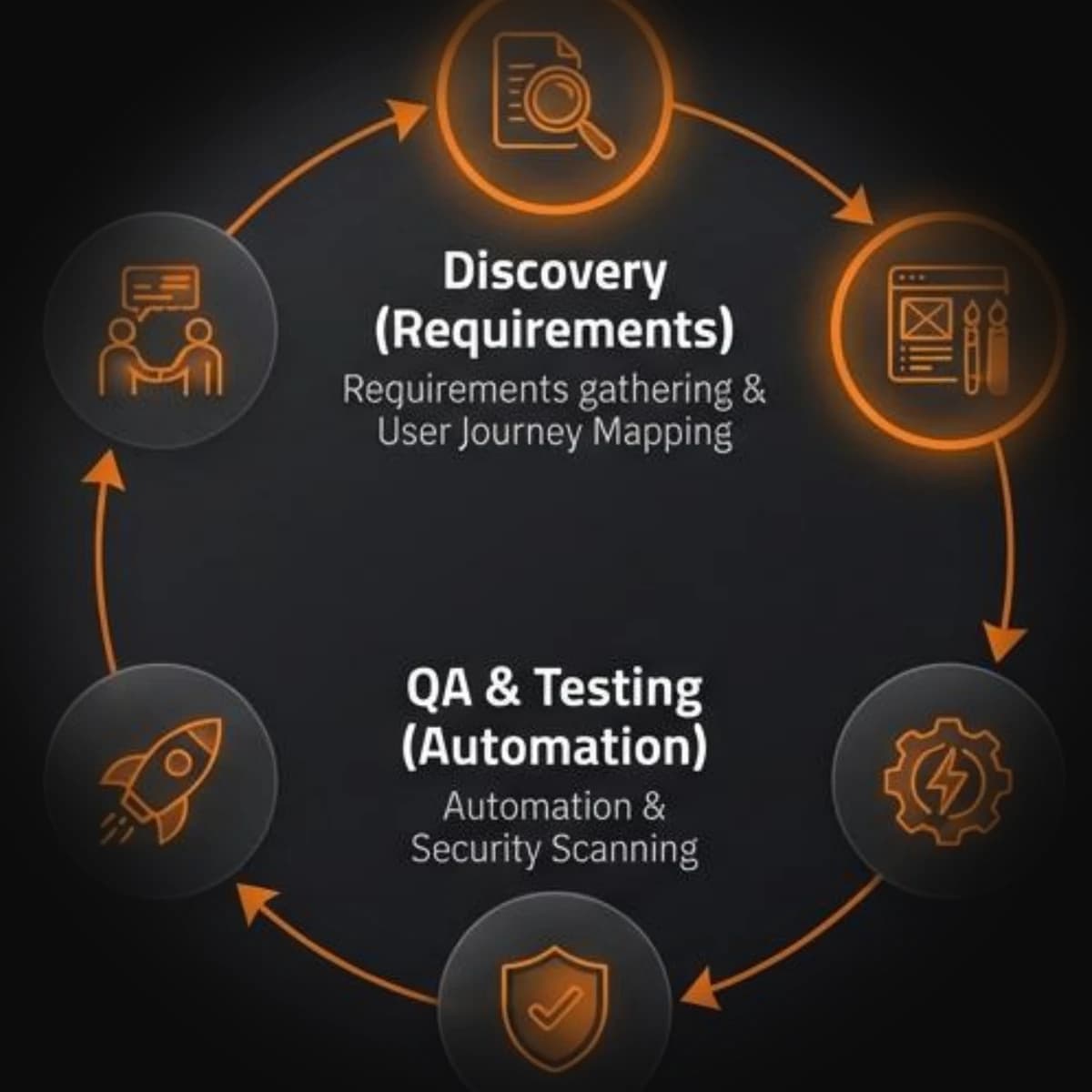
Requirements and User Journey Mapping
We immerse in your business context, map every user touchpoint, and document requirements with precision.
UX/UI Design in Figma
High-fidelity wireframes and interactive prototypes. You see and approve the product before any code is written.
Sprint Development
Iterative 2-week sprints with steering committee reviews. Continuous delivery, zero surprises.
Automation and Security Testing
Automated test suites and security scanning on every build. Audit-ready from day one.
Automated Zero-Downtime Deployment
Zero-downtime deployments to your chosen cloud environment, fully automated.
Training and Knowledge Transfer
Full documentation, admin training, and workshops. Your team owns the product completely.
The Comparison
Why us over the alternatives
You are choosing between four options, and two of them are cheaper than us. Here is the honest version of that comparison, including where the others genuinely win.
| Zizian | Traditional consultancies | Offshore firms | An in-house team | |
|---|---|---|---|---|
| Approach | Overlay architecture, modernised in phases | Rip-and-replace, greenfield programmes | Cost-led delivery against your spec | Whatever the backlog allows |
| Your legacy systems | Kept, integrated with, and left running | Usually recommended for replacement | Often not understood in enough depth | Understood deeply, but modernisation skills are thin |
| Time to first value | Weeks, in working increments | Months to years, at a single cutover | Variable, and slowed by the distance | Blocked behind competing priorities |
| If it goes wrong | One component reverts, the business carries on | The programme and the operation are the same risk | Rework across a timezone gap | Contained, but the capability gap remains |
| South African context | In Johannesburg, in your timezone, POPIA in the design | Local regulatory depth varies by firm | Offshore, with the communication overhead that brings | Present, but capacity constrained |
| How you engage | Discovery Sprint, staff augmentation, or fixed project | Mostly large fixed-price programmes | Usually time and materials | Headcount and the hiring cycle |
Engagement
Three ways to work with us
Most clients start with a sprint and decide from there. Nothing here requires you to commit to a full build before you have seen what one would involve.
Project-Based Delivery
End-to-end execution. We take the brief, build the solution, and hand over a turnkey product. Ideal for MVP launches.
Fixed scope. Fixed price. No ambiguity.
Staff Augmentation
We provide vetted, senior technical resources to join your existing team. Short-term or long-term contracts.
Month-to-month or annual. Immediate start.
The Discovery Sprint
A low-risk, fixed-cost engagement to define architecture and design before committing to a full build.
1 to 2 months. Tangible deliverables. Zero regret.
This is the method that built the platforms in our portfolio, several of which run in production today on the same stack we would put behind your overlay.
See the workQuestions
What clients ask before signing
What is overlay architecture?
A new layer built alongside your existing systems rather than in place of them. The new layer takes on the new functionality while the legacy system keeps doing what it already does well, so there is no cutover weekend, no data migration, and no parallel run.
Do we have to replace our legacy system?
No. That is the point of the method. Replacement programmes fail all at once, usually well into the second year, and the old system is often still running on the day the programme is cancelled. An overlay fails one component at a time, small enough to reverse.
How long before we see anything working?
Weeks. Delivery runs in two-week sprints with a steering review at the end of each, so the first working slice ships while a replacement programme would still be writing its migration plan.
What is a Discovery Sprint and what do we get?
A fixed-scope, fixed-cost engagement against your actual systems. You get a current-state assessment, two or three costed overlay options, a business case with a payback period and best and worst cases, and a phased roadmap. The findings are yours whether or not you continue with us.
How is Zizian different from a large consultancy or an offshore firm?
A large consultancy can put forty developers in a room on a fixed date and we cannot. If the work is fully specified and the only variable is hourly cost, an offshore firm will beat our rate. Zizian is the right call when the system matters too much to switch off, the requirements are still being discovered, and somebody needs to be accountable for the outcome in your timezone.
Does an overlay make compliance harder?
Usually easier. New functionality that has to meet a specific standard, such as POPIA obligations around personal information, can be isolated in the new layer without re-certifying the entire legacy estate.
Straight Answer
When we are the wrong choice
If your legacy system is genuinely finished, unsupported by its vendor and holding data nobody can read, an overlay is a way of postponing the decision rather than making it. Say so early and we will tell you that.
If you need forty developers on a fixed date, a large consultancy can put them in the room and we cannot. If the work is well specified and the only variable is cost per hour, an offshore firm will beat our rate and should.
We are the right call when the system matters too much to switch off, the requirements are still being discovered, and somebody needs to be accountable for the outcome in your timezone.
Book a Discovery Sprint